The recall was posted in November. MAUDE showed it in July.
A Class I insulin pump recall, traced back through FDA’s device reports. The warning was sitting in the report text for months.
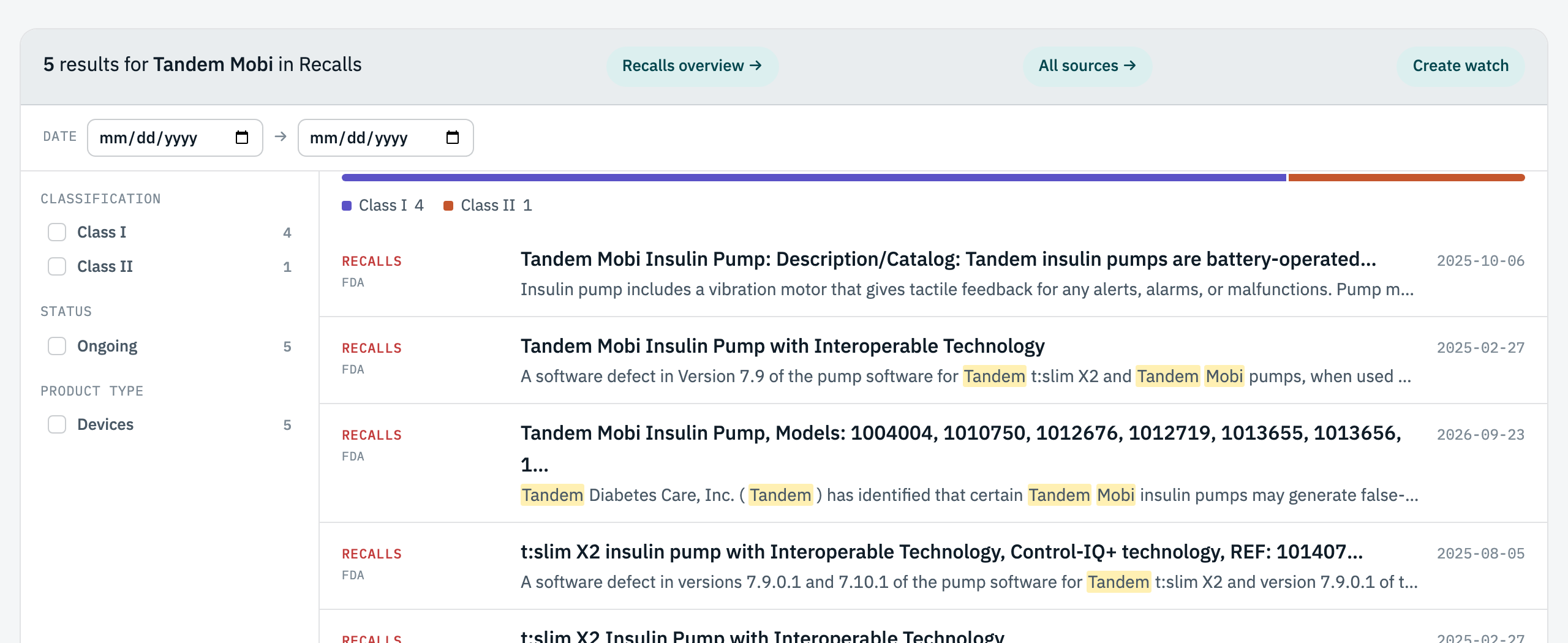
On November 12, 2025, FDA posted a Class I recall, its most serious category, for the Tandem Mobi insulin pump. A software problem could make the pump think its vibration motor had failed. The pump would show “Malfunction 12” and stop delivering insulin, which can lead to dangerously high blood sugar.
If you follow FDA’s recall list, that’s the day you heard about it. If you were reading the device reports in MAUDE, you could have seen it coming in July.
The totals didn’t show it
MAUDE reports for the Mobi went from 3,641 in June 2025 to 5,546 in July. That’s a real rise, but for a pump with a lot of users it doesn’t jump out at you.
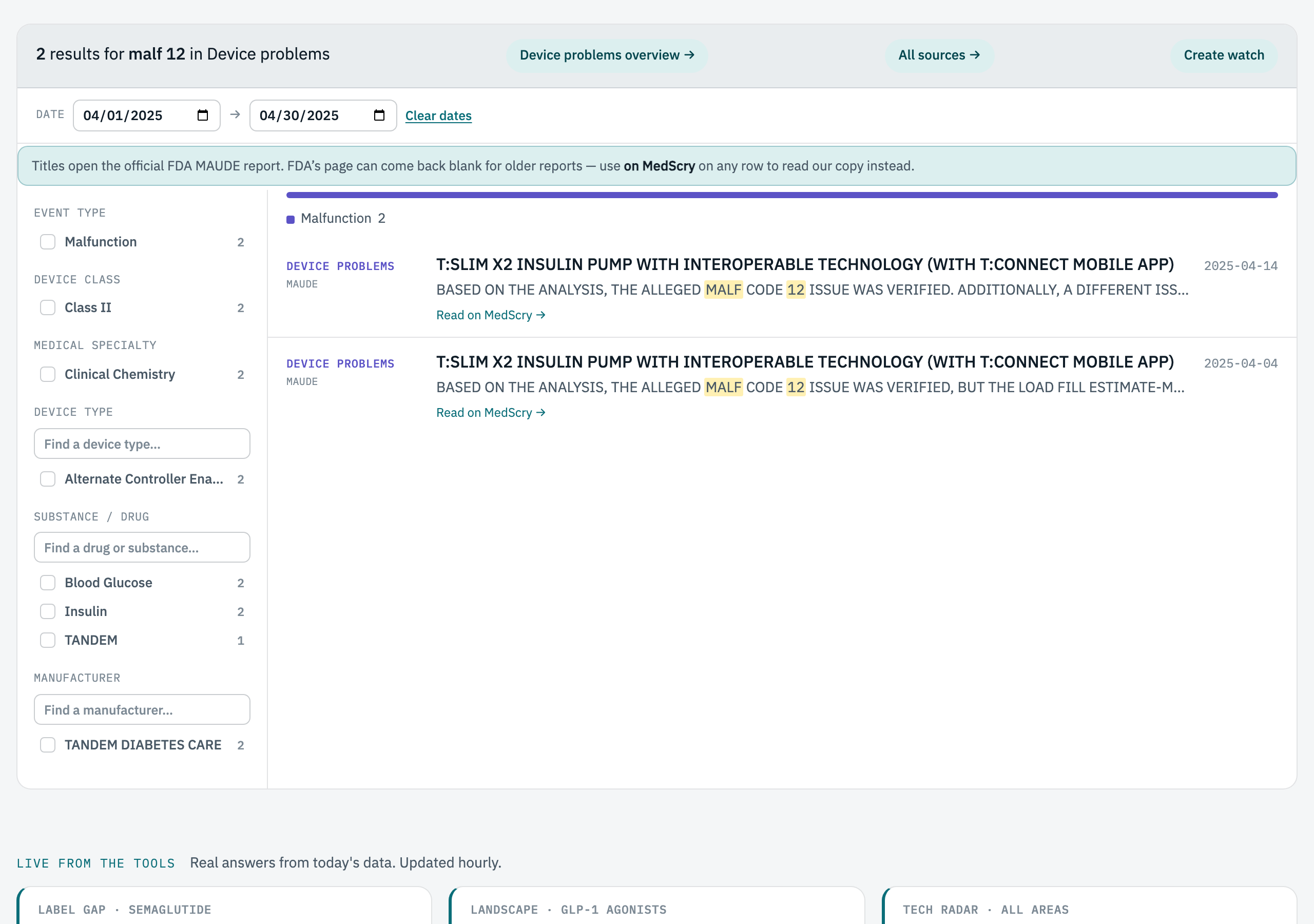
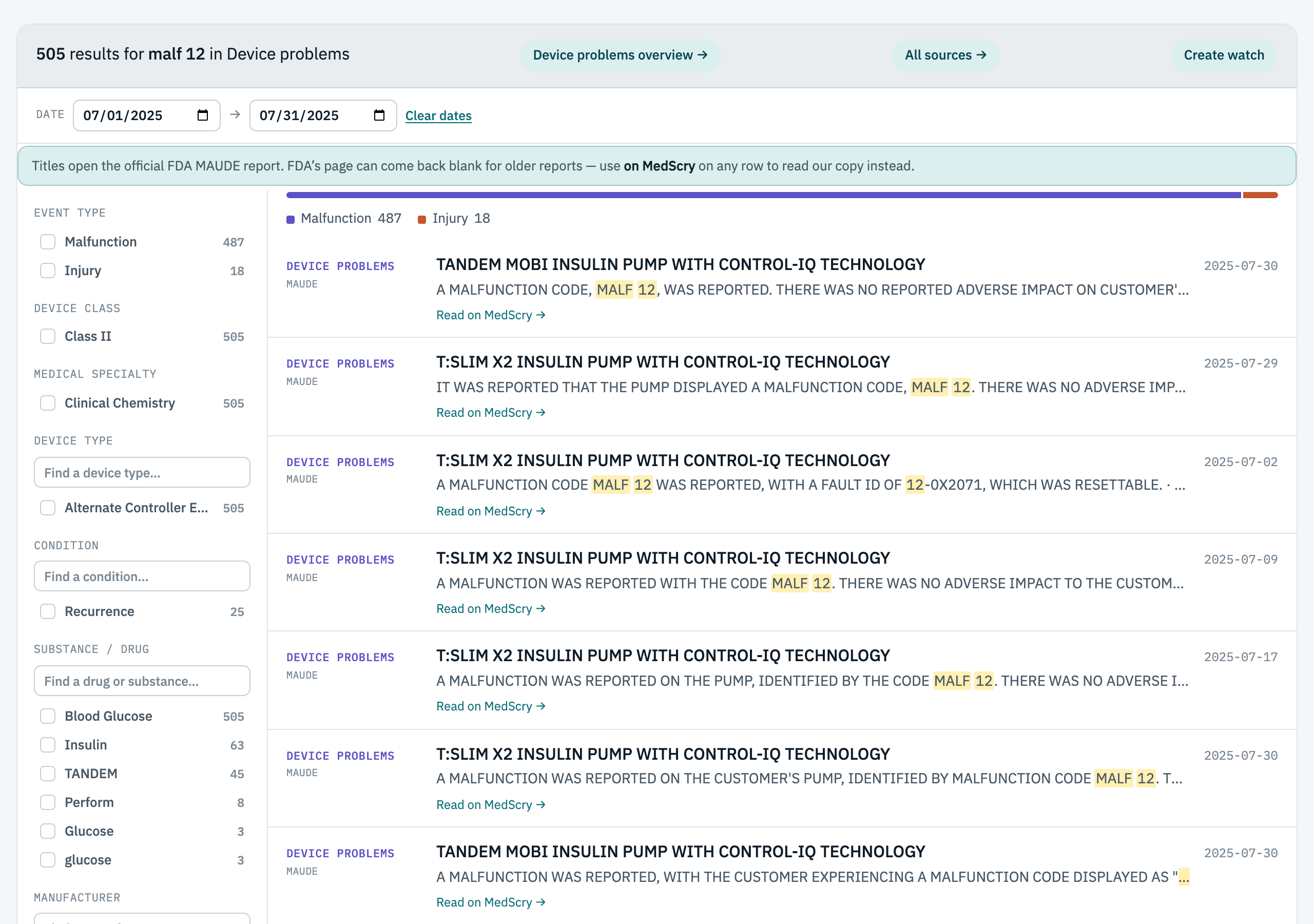
The error code does. We searched MedScry for “malf 12”, the way most of these reports write it, and counted by month:
| Month (2025) | Reports mentioning “MALF 12” |
|---|---|
| April | 2 |
| May | 1 |
| June | 56 |
| July | 505 |
| August | 480 |
| September | 628 |
| Oct 6 · the manufacturer starts the recall | |
| Nov 12 · FDA posts the Class I recall | |
Two reports in April. Five hundred and five in July. Every one of them is a Tandem pump, and about half name the Mobi (most of the rest are Tandem’s t:slim X2). A report from July 7 is typical:
“A malfunction occurred on the pump with the malfunction code MALF 12… Customer was unable to reset the Mobi pump.”
By October 6, when the recall started, there were close to 1,900 reports mentioning the code. Sixty-eight of them were filed as injuries.
Nobody was hiding anything here. Tandem filed these reports itself, as the rules require, and then recalled the pump. What interests us is the gap: the problem sat in public data for about three months before it became a recall.
Why it’s easy to miss
- Totals hide it. A 50% rise for a popular device looks like normal growth.
- FDA’s MAUDE search returns at most 500 records per search, and it isn’t built for counting a phrase month by month.
- Recalls live in a different FDA database, with a different search page.
- openFDA can do the counting if you write API queries, but its recall data runs behind. When we checked on November 13, 2026, it still didn’t have the newest Class I recall for the same pump. Tandem started that one on September 23, and FDA posted it on November 11. MedScry already shows it.
How we’d do it in MedScry
- Search for the problem, not just the product. Try an error code, a symptom, or plain words like “pump stopped delivering insulin.”
- Set a date range and step through the months.
- Use the filters on the left for manufacturer, device type, and malfunction vs. injury.
- Read a few dozen narratives. Every row links to its FDA record.
- Check recalls from the same search box, then create a watch so new reports come to you by RSS, Slack or Teams. You don’t need an account.
A word of caution
A jump in reports means “look closer,” not “this device is defective.” MAUDE reports aren’t verified, and counts aren’t rates. Here the reports and the recall turned out to describe the same failure, which is exactly why it’s worth reading reports early instead of waiting for the notice.
Write to us
If you work in post-market surveillance, quality or regulatory, we’d like to hear from you. Tell us if you’d have done this differently, if we got something wrong, or if there’s a case you’d like us to look into. Email hello@medscry.com. A person reads every message.
Reproduce this: search “malf 12” in MAUDE for July 2025, then change the dates to April 2025.
Prefer an AI assistant? Ask Claude, ChatGPT or Cursor the same question through PolarisRay, our free MCP connector.
Data pulled November 12–13, 2026, from MedScry’s MAUDE index. The share of reports naming the Mobi comes from openFDA. Recall details are from FDA enforcement records Z-0427-2026 and Z-0316-2027. MAUDE reports are voluntary and unverified, and they don’t establish that a device caused an event. For research and information only. Not medical advice.